By Wayne Weiner, D.Ed.
Introduction: What Science Says
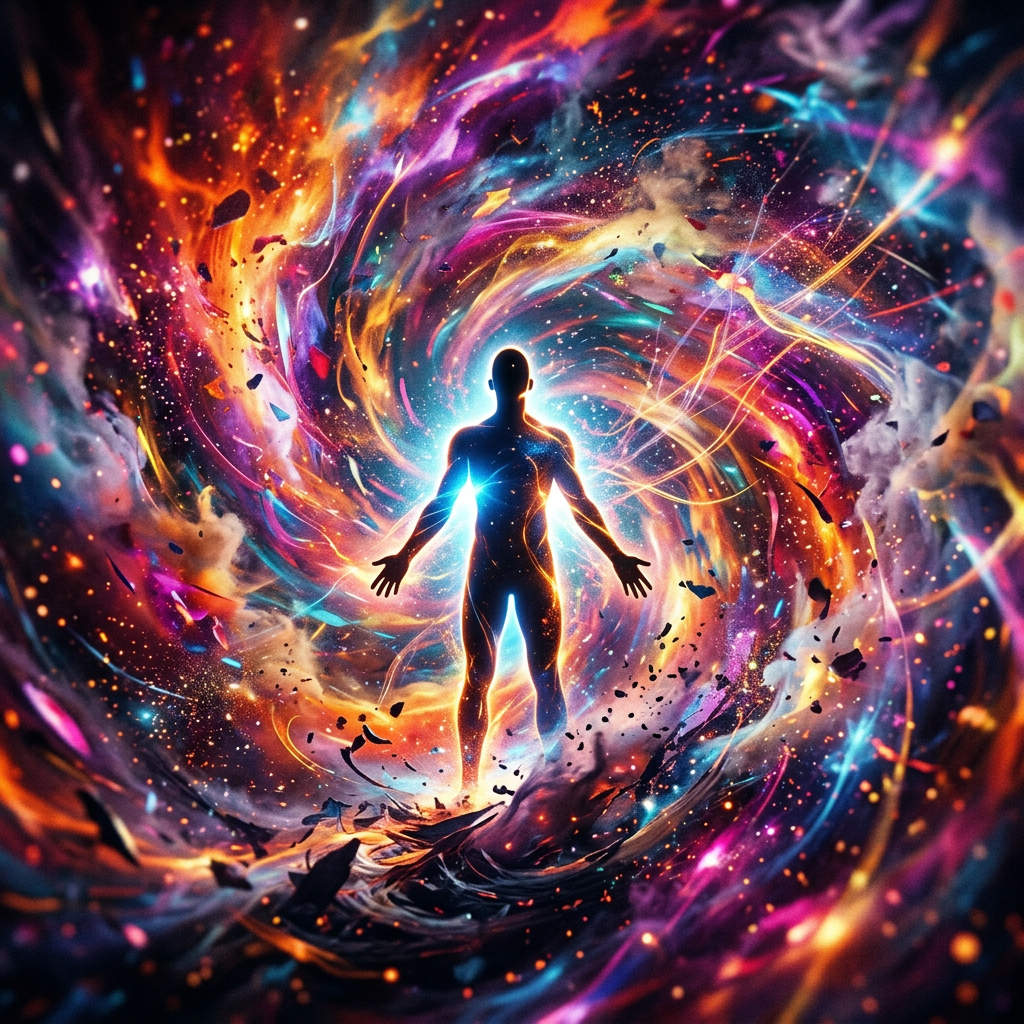
Scientists have discovered something remarkable. As death approaches, the brain does not simply switch off like a light. In some people, researchers have observed a brief surge of organized brain activity during the final moments. Memory, emotion, and awareness may briefly become more active before fading away. What those moments mean remains one of science’s greatest mysteries. No one knows whether they are simply the brain’s final electrical symphony or something more.
What follows is not science, but my imagination.
Philip had spent his entire life asking questions no one could answer.
He was not interested in proving one religion right or another wrong. His passion was understanding why, across thousands of years and every civilization, human beings had imagined what came next.
One evening, as the sun disappeared beyond the hills, Philip smiled.
“I think,” he whispered to himself, “I know why.”
He imagined the human brain as the greatest storyteller ever created.
For millions of years it had learned, remembered, loved, feared, celebrated, regretted, forgiven, and dreamed. Why should its final act be silence?
Perhaps, he thought, the brain gives every person one last gift.
Meaning.
Not an objective Heaven or Hell.
A personal one.
He pictured the first people emerging from caves more than forty thousand years ago. Around dying campfires they believed their hunters would join the spirits of great animals roaming endless forests. Their paradise was filled with food, family, and safety. Their hell was endless hunger and loneliness.
The ancient Egyptians imagined sailing with the gods along the celestial Nile. Their hearts were weighed against the feather of truth. A life of justice opened the gates to everlasting peace.
The Greeks envisioned the Underworld. Heroes reached the Elysian Fields, while others wandered the shadowy realm of Hades. Their afterlife reflected honor, courage, and the choices made in life.
The Norse believed the bravest warriors would feast forever in Valhalla, preparing each day for the final battle beside the gods.
For many Hindus and Buddhists, death was not an ending but another chapter in an endless cycle of rebirth, with enlightenment offering freedom from that cycle.
Jews, Christians, and Muslims each developed rich understandings of divine judgment, mercy, resurrection, and eternal life with God. Though their traditions differ, each offers hope that life carries purpose beyond death.
Even those who reject religion often imagine something. Some hope simply to return to the universe that created them. Others believe they will live on through their children, their work, their memories, or the lives they changed. Some expect only peaceful nothingness, free from pain or fear.
Philip found beauty in all of them.
Not because they were identical.
But because every one revealed what people valued most.
Love.
Justice.
Family.
Honor.
Peace.
Forgiveness.
Purpose.
“If the brain truly awakens one final time,” Philip wondered, “perhaps it gathers every memory, every hope, every regret, every dream, and weaves them into one final story—the story that gives our lives meaning.”
Perhaps a devoted grandmother sees children running toward her.
Perhaps a soldier finally lays down his burden.
Perhaps an artist walks into colors beyond imagination.
Perhaps an atheist simply feels complete, becoming part of the stars that formed every atom in the body.
Perhaps Heaven and Hell are not rewards or punishments handed to us by the universe, but the final language through which the brain explains an entire lifetime to itself.
Philip knew there was no experiment that could prove his idea.
Nor was there one that could completely disprove it.
He simply believed that if the human brain could create music, mathematics, Shakespeare, the pyramids, telescopes, symphonies, and love itself, perhaps its last masterpiece would be the most personal story it ever told.
As the last electrical currents faded into silence, Philip smiled.
Not because he thought he had solved death.
But because he believed he had discovered one more reason to appreciate life.
The brain’s final gift might not be certainty.
It might simply be meaning.
Leave a Reply